


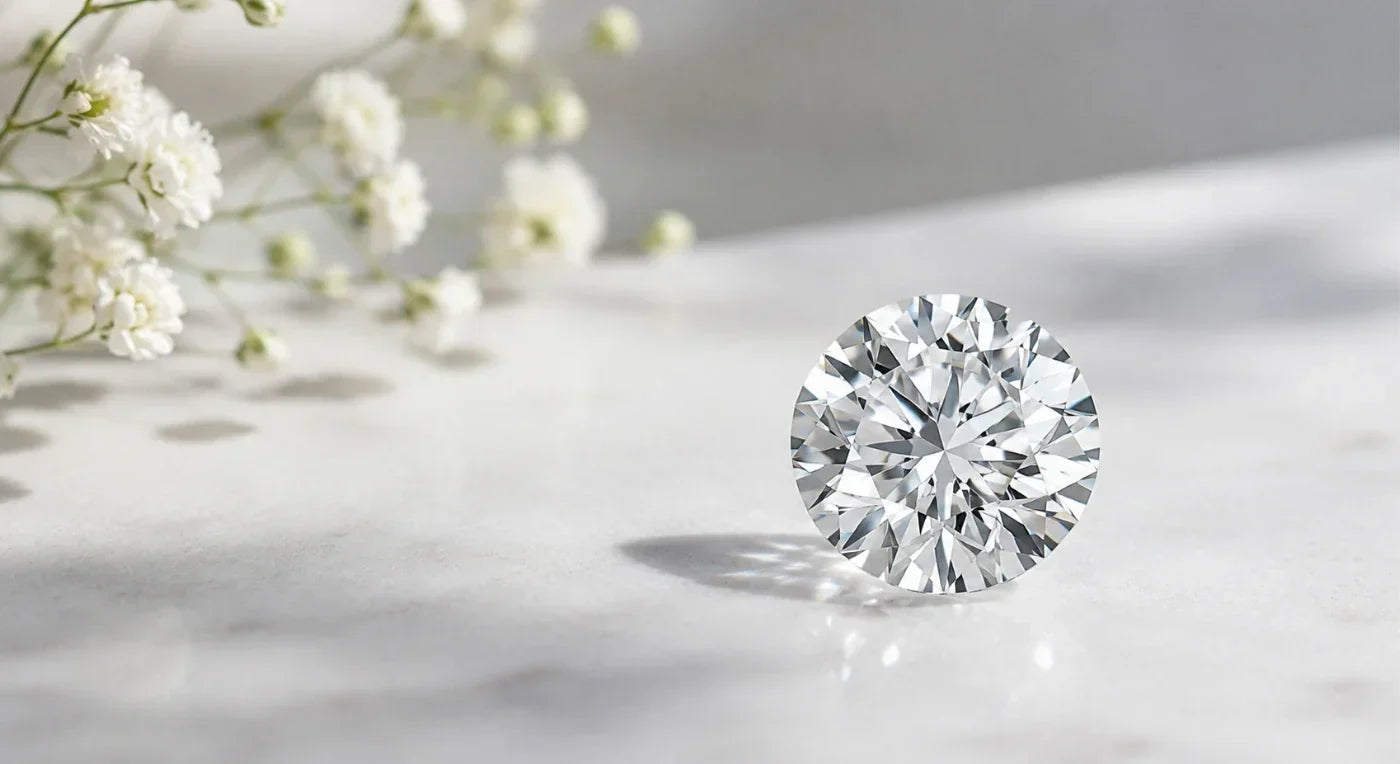
If you've been ring shopping for more than five minutes, you've probably run into the term "lab grown diamond" more times than you can count. It's not a passing trend; it's quickly becoming the default choice for couples who want a real diamond without the baggage that sometimes comes with a mined one. But what are the benefits of lab grown diamonds, exactly, and why are so many people switching?
Let's break it down in plain terms, no jewelry counter jargon required.
First, What Even Is a Lab Grown Diamond?
A lab grown diamond is a real diamond. That's the part people are often surprised to learn. It has the same chemical makeup, the same crystal structure, and the same sparkle as a mined diamond; the only difference is where it comes from. Instead of forming underground over billions of years, it's grown in a controlled lab environment over a few weeks, using the exact same carbon-to-diamond process nature uses, just sped up.
Gemologists need specialized equipment to tell the two apart. To the naked eye, and even under a jeweler's loupe, they're identical.
With that out of the way, here's a look at the real benefit of a lab grown diamond, or rather, the several benefits that tend to matter most to today's buyers.
1. You Get More Diamond for Your Money
This is usually the first thing people notice. Lab grown diamonds typically cost 30% to 40% less than mined diamonds of the same size and quality. That price gap exists because growing a diamond in a lab skips the enormous cost of mining operations: no heavy machinery, no massive land excavation, no complex international supply chains moving rough stones from mine to market.
For buyers, that difference in price translates into real options. You can:
-
Choose a noticeably bigger center stone for the same budget
-
Upgrade the clarity or color grade instead of settling for a smaller, lower-grade stone
-
Put more of your budget toward the setting, metal, or a custom design
-
Simply spend less overall without compromising on quality
For couples working within a set budget, which is most couples, this alone is often reason enough to make the switch.
2. They're a More Sustainable Choice
Diamond mining is a resource-intensive process. It involves moving enormous volumes of earth, and it can affect local water systems, soil, and wildlife habitats in the areas where mining takes place. Lab grown diamonds sidestep almost all of that. Because they're created in a facility rather than extracted from the ground, their environmental footprint is dramatically smaller.
If sustainability is something you think about when you shop, for anything, not just jewelry, this is one of the more meaningful benefits of lab grown diamonds. You're getting the same stone, minus the environmental cost of digging it out of the earth.
3. Full Transparency on Sourcing
One of the long-standing concerns with mined diamonds is the question of origin. Even with certification systems in place, tracing a mined diamond's full journey from the ground to the store can be genuinely difficult, and the industry has a well-documented history with conflict diamonds.
Lab grown diamonds remove that uncertainty entirely. Since they're created in a lab rather than sourced from mines scattered across different regions, there's a clear, traceable origin for every stone. If knowing exactly where your diamond came from matters to you, this is a straightforward win.
4. Identical Quality, Verified by the Same Standards
A lab grown diamond isn't a "diamond alternative"; it's graded using the exact same 4Cs system (cut, color, clarity, and carat weight) used for mined diamonds, and it's certified by the same major gemological labs, including GIA and IGI. When you buy a lab grown diamond, you're getting a certificate that confirms its quality using the same criteria jewelers have relied on for decades.
This is different from a simulant like cubic zirconia or even moissanite, which are diamond look-alikes but chemically distinct materials. A lab grown diamond is chemically, physically, and optically a diamond full stop.
5. Better Clarity and Color, More Often
Because lab grown diamonds are created in a controlled environment, they tend to have fewer inclusions and impurities compared to mined stones. Growers can closely manage the conditions the diamond forms under, which often results in higher clarity grades being more accessible at a given price point. In other words, it's easier to find a lab grown diamond with excellent clarity and color without paying a mined-diamond premium for it.
6. No Guilt, No Guesswork
For a lot of buyers, this benefit is less about specs and more about peace of mind. There's no question of whether the stone was ethically sourced, no wondering about labor practices at a distant mine, and no need to just take a retailer's word for it. A lab grown diamond gives you one less thing to worry about on what should be one of the more joyful purchases of your life.
7. They Hold Up Exactly Like Mined Diamonds
Some people worry that because lab grown diamonds are newer to the mainstream market, they're somehow less durable. That's not the case. Diamonds rank a 10 on the Mohs hardness scale regardless of where they were formed mined or lab grown, the hardness is identical. Your ring will handle daily wear, from typing at your desk to washing dishes, exactly the same way a mined diamond ring would.
So, Is a Lab Grown Diamond Right for You?
If you're weighing the benefits of lab grown diamonds against a mined stone, it really comes down to what matters most to you: budget, sustainability, sourcing transparency, or some combination of all three. For a growing number of couples, lab grown diamonds check every box without asking them to compromise on brilliance, durability, or that "real diamond" feeling.
At Bright Brilliance, every lab grown diamond piece is certified, ethically created, and priced to give you more ring for your budget. If you're not sure where to start, our team is always happy to help you find a piece that fits your style and your story no pressure, no jargon, just honest guidance.


