


A Simple Guide That Actually Makes Sense
If you've heard the term "lab grown diamonds" and thought, wait, are those even real diamonds? You're not alone. A lot of people wonder the same thing. The short answer is yes, they are absolutely real diamonds. They look the same, shine the same, and are made of the exact same stuff as diamonds found underground. The only difference is where they were made.
So let's break it down in a way that's super easy to understand.
First, What Is a Diamond Made Of?
A diamond is made of carbon, the same stuff found in pencils (graphite) and even in your body. The magic happens when carbon gets squeezed under extreme heat and pressure for a really long time. Deep inside the Earth, that process takes billions of years. But in a lab? Scientists can speed that up to just a few weeks.
Pretty cool, right?
Two Ways Lab Grown Diamonds Are Made
There are two main methods scientists use to grow diamonds in a lab. Both are fascinating.
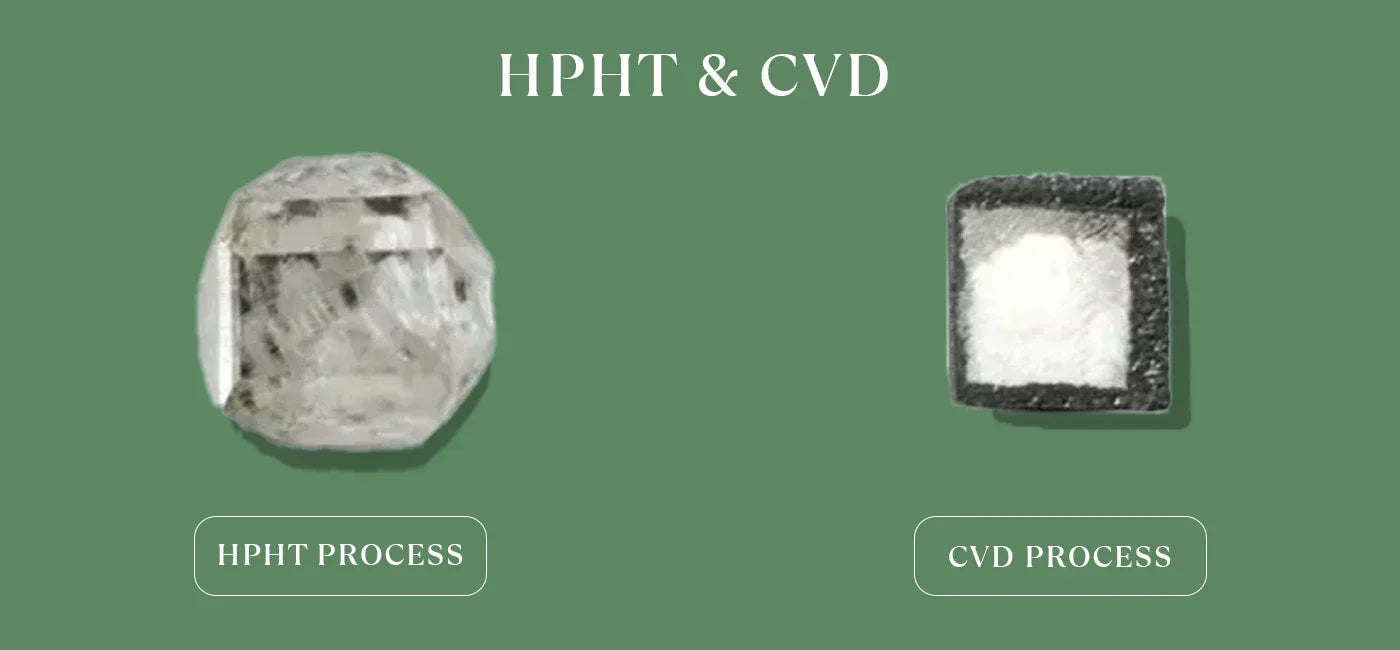
Method 1 HPHT (High Pressure High Temperature)
This method tries to copy what happens inside the Earth. HPHT stands for High Pressure, High Temperature, and that's exactly what it does.
Here's how it works:
Scientists start with a tiny piece of diamond called a seed. Think of it like a diamond baby. They place this seed inside a special machine along with pure carbon. Then the machine cranks up the heat to around 1,500 degrees Celsius; that's way hotter than a volcano. At the same time, it squeezes everything with pressure that is about 1.5 million times more than the air pressure we feel every day.
Under all that heat and pressure, the carbon melts and starts to stick to the diamond seed. Slowly, layer by layer, a new diamond grows around it. When it's done, you have a real, full-sized diamond grown in just a few weeks instead of a billion years.
Method 2 CVD (Chemical Vapor Deposition)
This one sounds like something straight out of a sci-fi movie, and honestly, it kind of is.
CVD stands for Chemical Vapor Deposition. In this method, scientists again start with a diamond seed, but this time they place it inside a special chamber. Then they pump in a gas, usually methane mixed with hydrogen. Next, they zap the gas with powerful energy (like microwaves or lasers).
That energy breaks the gas apart and releases pure carbon atoms. Those carbon atoms float around and slowly stick to the diamond seed, building up the diamond one thin layer at a time. It's almost like printing a diamond but with atoms instead of ink.
The CVD method gives scientists more control over how the diamond grows, and it's becoming very popular in the industry today.
What Happens After the Diamond Grows?
Once the diamond has finished growing, it looks rough and unpolished, kind of like a rock you'd find on the ground. It doesn't look like the sparkly gem you see in jewelry stores just yet.
That's where skilled diamond cutters come in. They cut and polish the diamond using the same techniques used for mined diamonds. After cutting, the lab grown diamond goes through quality checks and gets graded just like a natural diamond looking at its cut, color, clarity, and carat weight.
After all that, it's ready to be set into a beautiful lab grown diamond ring, necklace, or earring.
Are Lab Grown Diamonds as Good as Mined Diamonds?
Yes, and here's the thing. Even trained gemologists can't tell the difference with just their eyes. The only way to tell them apart is with very special equipment. Lab grown diamonds have the same hardness, the same sparkle, and the same chemical structure as earth-mined diamonds.
Plus, they are a smarter choice for many reasons. They cost less, they don't require risky mining, and they have a much smaller impact on the environment.
The Bottom Line
Lab grown diamonds are not fake. They are not glass or cubic zirconia. They are real diamonds just made in a smarter, faster, and more modern way.
Whether it's HPHT copying the Earth's natural process or CVD building a diamond atom by atom, the result is always the same: a stunning, sparkling, real diamond.
And at Bright Brilliance, that's exactly what we offer. Diamonds that are beautiful, honest, and made for the future.


